A Star-Spangled Bite: American Hot Dog Recipes & History for the 250th Birthday
Celebrate America’s 250th birthday with a cross-country tour of iconic regional hot dog styles, from New York and Chicago to Texas, Arizona, and New Jersey, complete with history and recipes.
Few foods are as deeply tied to American culture as the hot dog. From ballparks to backyard barbecues, this humble staple has become a symbol of summertime, celebration, and community. As the United States marks its 250th birthday, there’s no better way to honor the occasion than by exploring the regional styles that turned the hot dog into an American icon.
Let’s take a cross-country journey through some of the most famous hot dog styles—each with its own story and flavor.
Recipe 1 of 7
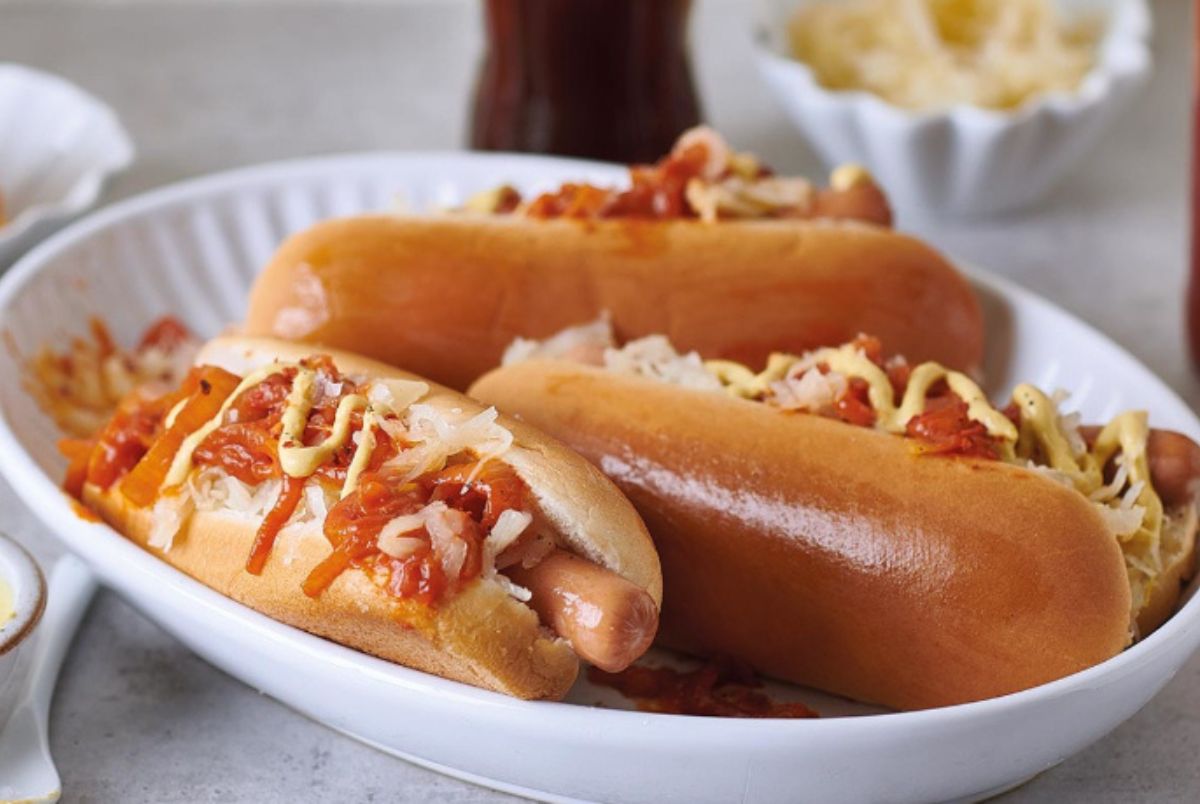
New York Hot Dog
The New York hot dog traces its roots to late 19th-century German immigrants who brought frankfurters to the United States, quickly popularizing them through street carts across New York City. Affordable, portable, and easy to prepare, hot dogs became a staple for working-class communities and a defining feature of the city’s food culture. Over time, the classic combination of mustard, sauerkraut, and onions turned the New York hot dog into an enduring symbol of American street food and urban life.
Ingredients
5 ingredients
Tick items off as you cook.
Method
4 steps
Tap a step’s number when it’s done.
Boil all-beef hot dogs
Warm hot dog buns until soft
Warm sauerkraut and onion sauce through
Place hot dogs into warmed bun and top with sauerkraut, spicy brown mustard, and onion sauce
The Chicago-style hot dog was born during the Great Depression, when vendors created a fully loaded, affordable meal to satisfy hungry customers. Built on an all-beef frankfurter and piled high with fresh toppings like mustard, onions, relish, tomatoes, pickles, sport peppers, and celery salt, it became known as a “meal on a bun.” Its strict no-ketchup rule and signature combination of flavors have made it an enduring symbol of Chicago’s culinary identity and pride.
The California hot dog reflects the state’s modern, health-conscious, and creative food culture, emerging in the late 20th century as chefs and home cooks began experimenting with fresh, unconventional toppings. Influenced by California cuisine’s emphasis on local produce and bold flavors, it often features ingredients like avocado, tomatoes, sprouts, and gourmet sauces. This style highlights the state’s spirit of innovation and its role in shaping contemporary American food trends.
The Texas chili dog draws inspiration from the bold flavors of Texas chili, a dish rooted in 19th-century frontier cooking and influenced by Mexican cuisine. As chili con carne gained popularity across the Southwest, it was eventually paired with hot dogs to create a hearty, satisfying meal often served at diners and roadside stands. With its rich, spicy topping—traditionally made without beans—the Texas chili dog reflects the state’s love of robust flavors and its lasting influence on American comfort food.
Ingredients
5 ingredients
Tick items off as you cook.
Method
4 steps
Tap a step’s number when it’s done.
Grill all-beef hot dogs
Warm chili on stove top or in microwave
Place the hot dog into the bun and spoon over chili
The Sonoran hot dog originated in the border regions of Arizona and northern Mexico, particularly in Sonora, before gaining popularity in cities like Tucson. Emerging in the late 20th century, it reflects a rich blend of Mexican and American culinary traditions, featuring a bacon-wrapped hot dog served in a soft bolillo-style bun and topped with beans, tomatoes, onions, and a variety of sauces. This vibrant, flavor-packed dish has become a beloved symbol of Southwestern street food and cross-cultural influence.
Ingredients
10 ingredients
Tick items off as you cook.
Optional – Jalapeno salsa for topping
Method
16 steps
Tap a step’s number when it’s done.
In a skillet, melt 1 tablespoon of butter over medium heat.
Once melted, cook ½ the diced onion, stirring frequently, until softened and starting to brown, 5 to 7 minutes.
Stir in pinto beans and cook until warmed through, 1 to 2 minutes.
Cover and keep warm until ready to use.
Wrap each hot dog with 1 strip bacon, spiraling from end to end, and stretching and overlapping slightly until hot dog is completely wrapped and bacon seams end up on same side (a second piece of bacon may be needed to adequately envelop the hot dog)
Adjust the oven rack to middle position and preheat the oven to 400°F.
Line a rimmed baking sheet with aluminum foil and set a wire rack into the prepared tray; set aside.
Arrange the bacon-wrapped hot dogs seam–side down on the prepared sheet tray and bake, flipping halfway through, until the bacon is well browned, 25 to 35 minutes.
Using a serrated paring knife, split each roll vertically down the side, leaving about 1/4-inch uncut at either end and without piercing the bottom of the bun and gently pry open, forming a bun “boat.”
In a skillet or griddle, melt 1 tablespoon butter over medium heat.
Working in batches, toast the buns until well browned on all sides, 2 to 5 minutes.
Transfer to a platter and let cool slightly, about 3 minutes, then spoon cooked onion and bean mixture down the center of each cut bun.
Nestle a hot dog into each bun, then top with raw chopped onion, diced tomatoes, and diced jalapenos.
Add yellow mustard vertically down the middle and jalapeno salsa (if using).
Squirt a zigzag of mayonnaise down the length of each hot dog.
The Michigan Coney dog originated in the early 20th century, created by Greek immigrants who brought their culinary traditions to cities like Detroit and Flint. Despite its name, the dish is uniquely tied to Michigan, featuring a hot dog topped with a savory meat sauce, mustard, and onions. Served in diners known as “Coney Island” restaurants, it became a beloved regional staple and a lasting symbol of immigrant influence on American comfort food.
Ingredients
16 ingredients
Tick items off as you cook.
Method
10 steps
Tap a step’s number when it’s done.
Place a large skillet over medium-high heat and add the ground beef and the onion.
Cook, breaking up the beef as it cooks, until the beef is browned and the onion is soft.
Stir in the chili powder, cumin, salt, garlic powder, and celery salt and cook for an additional 3 minutes.
Stir in the tomato sauce, water, mustard and Worcestershire sauce.
Bring to a boil, then reduce the heat and simmer for 20 minutes, or until thickened. (If the chili becomes too thick, add more water to loosen it up.)
While the sauce is simmering, heat the oven to 300ºF.
Wrap the buns in foil and place in the oven and bake until heated through, about 10 minutes.
Put the hot dogs in a large saucepan and cover with water.
Bring to a boil and cook the hot dogs until they are heated through, 5-8 minutes.
To serve, place the hot dogs in the buns and top with the chili, finely diced onion, and yellow mustard.
The New Jersey Italian hot dog originated in Newark in the 1930s within the city’s vibrant Italian-American community. Created as a hearty, working-class meal, it features a hot dog tucked into thick Italian bread and topped with sautéed peppers, onions, and crispy fried potatoes. This unique combination reflects both immigrant culinary traditions and the resourceful, flavorful cooking that defines New Jersey’s local food culture.
Ingredients
9 ingredients
Tick items off as you cook.
Method
14 steps
Tap a step’s number when it’s done.
Heat the olive oil in a large frying pan or skillet or griddle until it shimmers.
Put the potatoes in the pan in one layer and fry on medium-high heat for 2 to 3 minutes without touching them.
Use a metal spatula to scrape the potatoes off the bottom of the skillet, flipping them.
Sprinkle salt over the potatoes, and cook for another 2 to 3 minutes without touching them.
Remove the potatoes, which should be partially browned, to a bowl and set aside.
Increase the heat to high and add the peppers and onions.
Arrange evenly in the pan and cook for 2 to 3 minutes without touching them.
Sprinkle salt over them, then flip and cook for another 2 to 3 minutes untouched. There should be some browned and even blackened bits here and there.
Add the Italian seasoning and the potatoes to the pan, stir to combine and cook over medium-high heat until they are soft and nicely browned, about 8 to 10 minutes.
Heat a grill or a frying pan to cook your hot dogs; don't boil your dogs for this recipe.
Grill or fry until they are done to your liking and set aside.
Liberally smear mustard on both sides of the sandwich roll.
Add two hot dogs per roll and top with as much of the potatoes, peppers, and onions as will fit.
The hot dog is more than just a quick meal—it’s a reflection of America itself: diverse, adaptable, and rooted in tradition. Each regional variation tells a story of immigration, innovation, and local pride.
Want to see more recipes tied to America’s history? Visit amac.us/250 to learn more!






6 comments
Made it? Tell us how it went — or share your family’s version.