
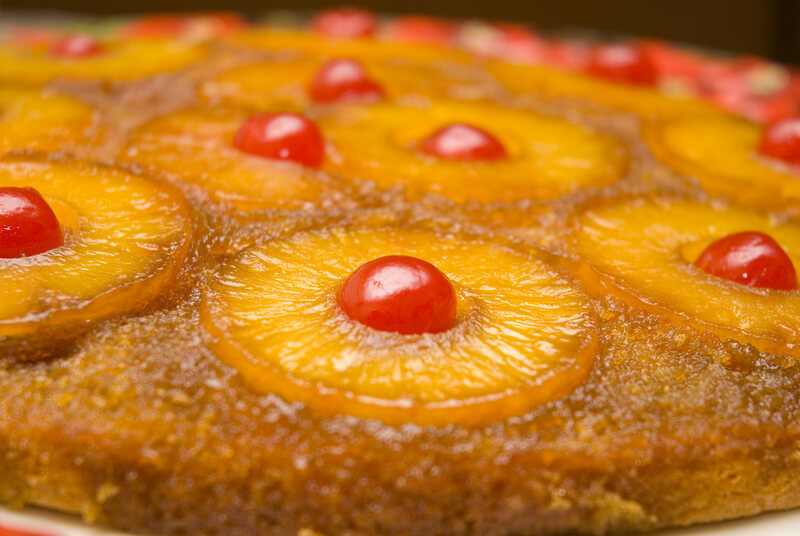

Bright, colorful, and irresistibly delicious, Pineapple Upside-Down Cake became one of the most recognizable desserts of the 1950s. With caramelized pineapple rings, vibrant maraschino cherries, and a tender butter cake baked beneath a rich brown sugar glaze, it was a favorite at birthday parties, church suppers, neighborhood potlucks, and Sunday family dinners.
Although the dessert reached iconic status during the postwar era, its roots stretch back much further, making it one of America's most enduring vintage recipes.
An Old Technique Becomes a New Classic
Long before electric ovens became common, American cooks prepared fruit "skillet cakes" in cast-iron pans over wood stoves. Apples, peaches, plums, and berries were layered with butter and sugar before the cake batter was poured over the top. Once baked, the cake was inverted onto a serving platter, revealing beautifully caramelized fruit.
This upside-down baking method was practical, economical, and visually impressive.
Pineapple Comes to America
Fresh pineapple was once a rare luxury enjoyed mainly by wealthy households. That changed in the early twentieth century as canned pineapple became widely available through advances in food preservation and commercial production in Hawaii.
The uniform pineapple ring—introduced in the 1910s—proved perfect for baking. Home cooks loved its attractive appearance, and the fruit's sweet-tart flavor paired beautifully with buttery cake.
The Contest That Made History
In 1925, the Hawaiian Pineapple Company (later known as Dole) sponsored a nationwide recipe contest featuring canned pineapple.
More than 60,000 recipes poured in, astonishing organizers. Even more remarkable, over 2,500 submissions were Pineapple Upside-Down Cakes.
The overwhelming popularity of one dessert convinced the company it had discovered an American favorite. Recipes soon appeared in newspapers, magazines, cookbooks, and advertisements across the country.
Why the Cake Flourished in the 1950s
After World War II, America's kitchens were changing.
Modern supermarkets offered convenient canned fruits, maraschino cherries, baking powder, vanilla extract, and reliable pantry staples year-round. At the same time, families were entertaining more frequently at home.
Pineapple Upside-Down Cake checked every box:
- It looked elegant without requiring advanced baking skills.
- The ingredients were inexpensive and easy to find.
- It could be baked in one pan—usually a well-seasoned cast-iron skillet.
- It was colorful enough for holidays and simple enough for weeknight desserts.
Women's magazines such as Better Homes & Gardens, Ladies' Home Journal, and Good Housekeeping regularly featured variations, while cookbook publishers—including Betty Crocker—helped cement its place in American kitchens. For many homemakers, it became the dessert they could confidently serve to guests, knowing it would be both beautiful and delicious.
A Dessert That Never Went Out of Style
Although food trends have changed over the decades, Pineapple Upside-Down Cake continues to evoke memories of family gatherings and simpler times. Today, it is enjoyed by a new generation of home bakers who appreciate classic recipes, cast-iron cooking, and nostalgic desserts.
Whether baked for a summer picnic, holiday meal, or America's 250th birthday celebration, this timeless cake remains a sweet reminder of the warmth and hospitality that characterized mid-century American kitchens.



6 comments
Made it? Tell us how it went — or share your family’s version.